

Effect of Heat on Your Pond: Managing Warm Water During Summer
As temperatures rise during the summer, ponds and lakes can experience changes that affect water quality and aquatic conditions. Warmer weather, increased sunlight, and changes in biological activity can all influence the pond environment.
Understanding how heat affects your pond can help you make informed decisions about aeration, algae management and other pond-maintenance practices throughout the summer.
Warm weather can affect several important characteristics of pond water:
- Warm water holds less dissolved oxygen. As water temperature increases, its capacity to hold dissolved oxygen decreases.
- Biological activity can increase. Warmer conditions can increase the activity of organisms in the pond, which can influence oxygen demand.
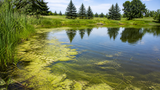
- Algae can become more noticeable during warm, sunny conditions. Temperature, sunlight and nutrient availability can all influence algae growth.
- Fish may experience thermal stress. Changes in water temperature and dissolved oxygen can affect aquatic organisms, particularly during periods of prolonged hot weather.
Fortunately, there are several pond-management practices that can help you manage your pond during periods of warm weather.
Aeration
Aeration can help circulate pond water and support oxygen transfer between the water and atmosphere. Bottom-diffused aeration releases air at the bottom of the pond. As the bubbles rise, they move water upward, creating circulation throughout the water column. This circulation brings deeper water toward the surface, where it can interact with the atmosphere and exchange gases.
Aeration can be particularly useful during periods when warm water and increased biological activity place greater demands on available dissolved oxygen.
Aeration can also influence water temperature because circulation mixes water throughout the pond. During hot weather, running aeration during cooler periods, such as overnight (9 pm to 12 pm), can help limit circulation during the hottest part of the day. An outdoor-rated digital timer can be used to automate the operating schedule.
Explore Can-Air Aeration Systems
Explore Kasco Marine Aerating Fountains
Algae Treatment
Warm, sunny conditions can contribute to increased algae growth in ponds. ProClear Algaecide is a great solution that readily treats/prevents algae and maintains a healthy, beautiful-looking pond.
Pond Dye and Sunlight
During the summer months, sunlight can warm pond water and contribute to conditions that promote algae growth. Pond dyes can alter the amount of sunlight that penetrates the water column, which may help reduce solar warming and maintain cooler water temperatures.
Explore Pond & Lake Dye Options
Keep Your Pond Prepared for Summer
Hot weather can change water temperature, dissolved oxygen and other conditions within a pond. Monitoring your pond and using appropriate management practices can help you respond to changing summer conditions.
Aeration, algae management and other pond-maintenance practices should be selected based on the characteristics of your pond and the intended use of each product or system.
If you have questions about managing your pond or lake during the summer, contact our team at sales@pondpro.ca.
Turn Tips into Action – Shop this Blog Post!
Recent Posts
-
How to Keep Koi Pond Water Clear | Koi Pond Care Canada
How to Keep Koi Pond Water Clear Clear koi pond water is one of the most common goals for backyard p …20th May 2026 -
Why Pond and Lake Water Often Turns Green During Summer Months
For many people who live near the water, the season can start off beautifully. The ice disappears, …15th May 2026 -
Pond Scum in Canadian Ponds: What It Is, Why It Happens, and How to Treat It
What Is Pond Scum? “Pond scum” can be a general term people use for the green, slimy, floating, or s …5th May 2026