
How to Keep Koi Pond Water Clear | Koi Pond Care Canada
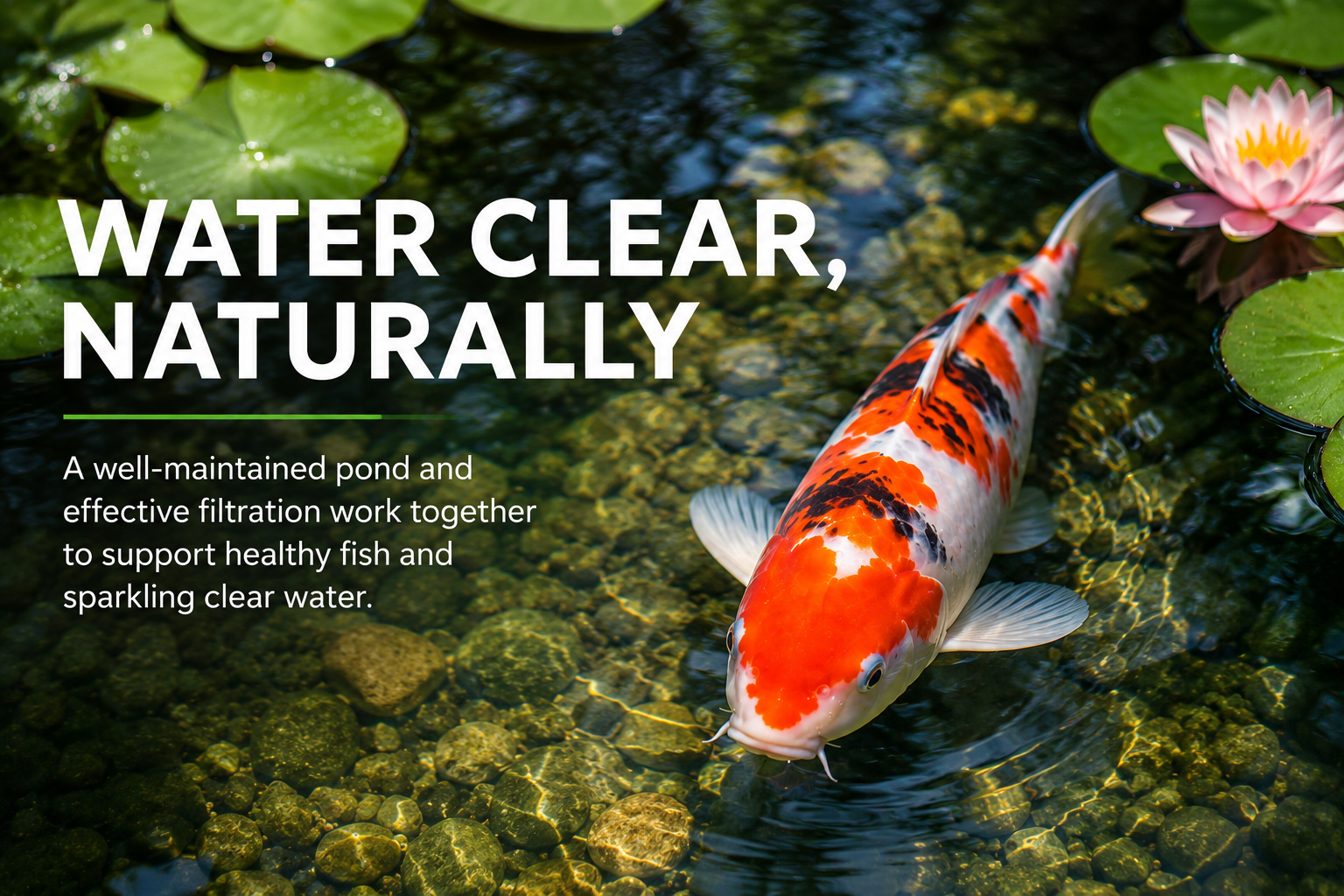 How to Keep Koi Pond Water Clear
Clear koi pond water is one of the most common goals for backyard pond owners, but it usually takes more than one treatment or one quick fix. In most ponds, water clarity improves when feeding, filtration, oxygen, beneficial bacteria, algae control, and seasonal maintenance are working together.
If your koi pond water looks green, cloudy, brown, or murky, it may be a sign that the pond has more waste, nutrients, or organic debris than the system can comfortably process. This can happen after heavy feeding, warm weather, rainfall, poor circulation, spring startup, or a buildup of leaves and sludge.
For Canadian pond owners, seasonal changes also play a major role. A pond can behave very differently in spring, summer, fall, and winter, so the best approach is to build a practical routine that supports the pond throughout the year.
Quick Answer: How Do You Keep Koi Pond Water Clear?
To help keep koi pond water clear:
- Feed koi carefully and avoid excess uneaten food.
- Use pond filtration that fits your pond size and fish load.
- Add beneficial pond bacteria to support waste breakdown.
- Improve oxygen and circulation with pond aeration.
- Remove leaves, sludge, and organic debris regularly.
- Manage algae through prevention, not just treatment.
- Adjust pond care routines for Canadian seasonal conditions.
Why Koi Pond Water Turns Cloudy or Green
Koi pond water often becomes cloudy or green when there is an excess of nutrients in the pond. These nutrients may come from fish waste, uneaten koi food, decaying leaves, grass clippings, plant matter, or sludge sitting at the bottom.
Green pond water is commonly linked to suspended algae. This type of algae can make the pond look like pea soup, especially in warm, sunny conditions.
Cloudy pond water may come from fine particles, disturbed sediment, organic buildup, a new biological system that is still developing, or filtration that is not keeping up with the pond’s needs.
Murky water after rain can also happen when runoff carries soil, lawn debris, fertilizer, or other organic material into the pond.
Start With the Whole Pond System
A koi pond is a living environment. Fish, bacteria, oxygen, sunlight, pumps, filters, plants, and organic matter all affect water quality.
When one part of the system is under pressure, water clarity can suffer. For example, a pond with heavy feeding but limited filtration may become cloudy. A pond with low oxygen may struggle to break down waste efficiently. A pond with too much debris may develop sludge and algae issues.
This is why Pond Pro Canada generally recommends looking at the full pond system before choosing a treatment. Products can be very helpful, but they work best when they support a clear maintenance plan.
Feeding Habits Can Affect Water Clarity
Feeding koi is one of the most enjoyable parts of owning a pond, but it can also have a major impact on water quality.
When koi are fed more than they can eat, leftover food may sink and break down. This adds nutrients to the water and can contribute to cloudy water, algae growth, and sludge buildup.
A simple approach is to feed only what your koi can consume within a few minutes. If food is left floating or sinking, reduce the amount at the next feeding.
During summer, koi are usually more active and may eat more, but feeding should still be based on fish activity, water temperature, and pond conditions.
Using a quality koi food may also help support better digestion and reduce unnecessary waste. Pond Pro Canada’s koi food options can be part of a clear-water care plan when paired with proper feeding habits.
Fish Load and Pond Size Matter
Koi can grow large and produce a significant amount of waste. As they grow, the pond’s filtration and maintenance needs often increase.
A pond that stayed clear with small koi may become harder to manage as the fish mature. Adding more koi without improving filtration, aeration, or routine maintenance can also place extra pressure on the system.
If your koi pond water is often cloudy, consider:
Has the koi population increased?
Are the fish larger than they were when the pond was built?
Is the filter sized for the current fish load?
Is the pond being fed more than the system can handle?
In some cases, improving filtration, adding aeration, adjusting feeding, or reducing the fish load may help support clearer water.
Proper Filtration Helps Support Clear Pond Water
Filtration is one of the most important parts of koi pond maintenance. A good filtration system helps remove physical debris while also supporting the biological processes that keep pond water healthier.
Mechanical filtration captures particles such as fish waste, leaves, algae fragments, and uneaten food.
Biological filtration provides surface area where beneficial bacteria can live. These bacteria help process dissolved waste compounds and support the pond’s natural balance.
If a filter is too small, clogged, or not maintained regularly, water clarity may decline.
Signs your pond filtration may need attention
- Water remains cloudy after routine maintenance.
- The filter clogs quickly.
- Debris is visible in the water.
- Algae returns soon after treatment.
- The pond has an unpleasant smell.
- Sludge builds up faster than expected.
Pond pumps, filters, skimmers, and filtration support products should be chosen based on pond size, fish load, and how the pond is used.
Beneficial Bacteria Can Help Support Pond Clarity
Beneficial pond bacteria can help break down organic waste, uneaten food, fish waste, and sludge-forming material. They are especially useful when the pond is under seasonal or environmental stress.
Beneficial bacteria may be helpful:
- During spring startup
- After filter cleaning
- After heavy rain
- In newer ponds
- When sludge is starting to build up
- During warm weather when feeding increases
- After water changes or pond disruptions
It is best to think of beneficial bacteria as ongoing pond support, rather than an instant fix. They tend to work best when the pond also has good circulation, oxygen, filtration, and debris removal.
Pond Pro Canada’s beneficial pond bacteria and pond clarifiers can help support a cleaner pond environment when used as part of a regular care routine.
Aeration Can Improve Pond Conditions
Pond aeration helps add oxygen and improve water movement. This can support koi health, beneficial bacteria activity, and overall water quality.
Aeration can be especially helpful in warm Canadian summers, when koi are more active and oxygen demand may increase. Poor circulation can also allow debris to settle in low-movement areas, which may lead to sludge and water quality issues.
Aeration can help support:
Better oxygen levels
Improved circulation
Healthier biological activity
Reduced stagnant areas
More consistent water quality
For backyard koi ponds, aeration may come from an air pump and diffuser, a waterfall, a fountain, or a combination of systems. For larger ponds and acreage ponds, bottom-diffused aeration may be a good option.
Pond Pro Canada carries pond aeration systems for different pond sizes, from backyard ponds to larger Canadian water bodies.
Managing Algae in a Koi Pond
Some algae is normal in many ponds. The goal is not always to remove every trace of algae, but to prevent it from taking over the pond or reducing water clarity.
Algae growth is often encouraged by sunlight, nutrients, still water, and organic buildup.
Green Pond Water
Green pond water is usually caused by tiny suspended algae in the water. It can make the pond look cloudy, green, or pea-soup-like.
String Algae
String algae grows in strands or mats along rocks, waterfalls, shallow edges, and pond surfaces.
Algae control products may be useful in some situations, but they should be used carefully in koi ponds. Always choose products that are appropriate for fish ponds and follow label directions.
It can also help to reduce the conditions that encourage algae by improving aeration, reducing excess nutrients, removing sludge, and using pond dye where appropriate.
Removing Sludge and Organic Debris
Pond sludge is made up of decaying leaves, fish waste, uneaten food, dead algae, plant matter, and fine debris. When sludge builds up, it can contribute to cloudy water, odours, and nutrient issues.
Sludge may become worse when:
- Leaves are left in the pond.
- Fish are overfed.
- The pond has poor circulation.
- Filters are not cleaned regularly.
- Dead plant material is not removed.
- Algae dies off and settles at the bottom.
A pond net, skimmer, pond vacuum, beneficial bacteria, and sludge treatments may all help depending on the pond’s condition.
Pond Pro Canada’s pond sludge treatments can be used as part of a maintenance plan to help reduce organic buildup. In heavier cases, physical removal may also be needed.
Pond Plants Can Help When Managed Properly
Pond plants can support a healthier pond by providing shade, using nutrients, and creating a more natural environment. However, they still need maintenance.
Dead leaves, stems, and roots can break down and add more organic matter to the water. Overgrown plants may trap debris or reduce water movement.
For koi ponds, plants can also be more challenging because koi may disturb roots, pots, or tender growth.
A balanced approach may include:
Using plants for shade and natural nutrient uptake
Removing dead plant material quickly
Avoiding overgrown plant zones
Keeping water moving around planted areas
Plants can be part of a clear-water strategy, but they work best when managed consistently.
Seasonal Koi Pond Care in Canada
Canadian pond owners deal with major seasonal changes. A koi pond care routine should shift throughout the year based on temperature, fish activity, and weather conditions.
Spring Pond Care
Spring is often when pond water problems appear. Organic material from winter may start breaking down, filters are restarted, and koi slowly become more active.
In spring, focus on:
- Removing debris
- Checking pumps and filtration
- Starting beneficial bacteria when water temperatures allow
- Feeding gradually as koi become active
- Watching for algae or sludge buildup
Summer Pond Care
Summer is the peak season for feeding, algae growth, and water quality issues. Warm weather, sunlight, and active fish can increase pressure on the pond system.
In summer, focus on:
- Aeration
- Filter checks
- Beneficial bacteria
- Careful feeding
- Algae monitoring
- Sludge prevention
Fall Pond Care
Fall maintenance can make spring startup easier. Leaves and plant material should be removed before they sink and decay.
In fall, focus on:
- Netting or removing leaves
- Trimming pond plants
- Reducing feeding as temperatures drop
- Cleaning debris before winter
- Preparing pond equipment for cold weather
Winter Pond Care
In colder Canadian climates, koi ponds may need winter preparation. The goal is usually to support gas exchange and avoid unnecessary disturbance to koi.
Depending on the pond, this may include a pond de-icer, winter aeration, or other cold-weather pond care tools.
When to Use Pond Care Products
Different pond care products are designed for different situations. The best choice depends on what is happening in the pond.
Beneficial Pond Bacteria
Beneficial bacteria may help support waste breakdown, sludge reduction, and biological balance.
Pond Clarifiers
Pond clarifiers may help improve the look of cloudy water, especially when fine suspended particles are affecting clarity.
Pond Algae Control Products
Algae control products may help when algae is actively growing, but they should be used carefully and according to label directions.
Pond Dye
Pond dye may help reduce sunlight penetration in some ponds, which can support algae prevention and improve appearance.
Pond Aeration Systems
Aeration can help support oxygen, circulation, fish health, and beneficial bacteria activity.
Pond Sludge Treatments
Sludge treatments may help reduce organic buildup on the pond bottom when used as part of a regular maintenance routine.
Koi Food
Quality koi food and proper feeding habits may help reduce unnecessary waste and support better water quality.
Common Mistakes That Can Affect Pond Water Clarity
Many koi pond water issues are connected to small habits that build up over time.
Common mistakes may include:
- Feeding koi too much
- Adding too many fish
- Using undersized filtration
- Cleaning biological filter media too aggressively
- Ignoring sludge buildup
- Treating algae without improving oxygen or circulation
- Letting leaves collect in the pond
- Using products without knowing pond volume
- Expecting one treatment to solve every pond issue
Avoiding these mistakes can make pond maintenance easier and help support clearer water throughout the season.
A Simple Weekly Koi Pond Care Routine
A weekly routine does not need to be complicated. The goal is to catch small issues early.
1. Look at the Water
Check for green water, cloudiness, foam, odour, floating debris, or sudden changes.
2. Watch the Koi
Healthy koi are usually active and responsive when water temperatures are suitable.
3. Feed Carefully
Feed only what the koi can eat within a few minutes.
4. Remove Debris
Use a net or skimmer to remove leaves, grass, and floating organic matter.
5. Check the Filter
Inspect mechanical filtration and clean as needed. Be gentle with biological media so beneficial bacteria are not removed unnecessarily.
6. Add Beneficial Bacteria
Use beneficial pond bacteria according to the product label, especially during the active season.
7. Check Aeration and Circulation
Make sure pumps, waterfalls, fountains, or diffusers are working properly.
8. Watch for Algae and Sludge
Address early signs before they become harder to manage.
The Pond Pro Canada Approach to Clear Koi Pond Water
At Pond Pro Canada, clear koi pond water is best approached as a complete pond care plan. The right products can make a meaningful difference when they are matched to the pond’s size, fish load, season, and water quality concerns.
A clear-water plan may include proper feeding, quality koi food, right-sized filtration, beneficial bacteria, aeration, sludge control, algae management, pond dye where appropriate, and seasonal maintenance.
When these pieces are used together, pond owners may see better water clarity, healthier koi, and a more enjoyable backyard pond.
FAQs
Why is my koi pond water green?
Koi pond water may turn green when suspended algae grows in the water. This often happens when there are excess nutrients, sunlight, poor circulation, or filtration that is not keeping up with the pond’s needs.
How do I make my koi pond water clear naturally?
You can help support clearer koi pond water by reducing overfeeding, removing debris, improving filtration, adding beneficial bacteria, increasing aeration, and managing algae early.
Is cloudy pond water bad for koi?
Cloudy pond water is not always immediately harmful, but it may point to excess waste, poor filtration, algae growth, low oxygen, or organic buildup. Sudden changes should be looked at carefully.
How often should I clean my koi pond filter?
During the active season, it’s a good idea to keep an eye on your koi pond filter with regular weekly checks. Mechanical filter parts may benefit from routine cleaning, while biological filter media should be treated gently so the helpful bacteria can continue supporting healthy water quality.
Do beneficial bacteria really help clear pond water?
Beneficial bacteria can help support clearer pond water by breaking down organic waste and supporting biological balance. They tend to work best with proper filtration, aeration, and debris removal.
Can too many koi make pond water cloudy?
Yes, too many koi may contribute to cloudy water because more fish produce more waste. If filtration and aeration cannot keep up, water clarity may decline.
Should I use an algaecide in a koi pond?
An algaecide may be used in some koi ponds, but it should be selected carefully and applied according to label directions. It is also important to support oxygen, filtration, and nutrient control.
How does aeration help pond water clarity?
Aeration can help improve oxygen and circulation, which supports beneficial bacteria and healthier pond conditions. Better circulation may also reduce stagnant areas where sludge and algae issues can develop.
How often should I feed koi in summer?
In summer, koi may be fed more often because they are more active, but it is still best to feed only what they can consume within a few minutes. Overfeeding can contribute to cloudy water and algae growth.
What is the best way to prevent pond sludge?
The best way to help prevent pond sludge is to remove leaves and debris, avoid overfeeding, maintain filtration, use beneficial bacteria or sludge treatments, and improve aeration and circulation.
Suggested Internal Links
Add internal links to these Pond Pro Canada product and category pages:
- Beneficial pond bacteria products
- Pond clarifiers
- Pond aeration systems
- Pond algae control products
- Pond sludge and muck treatments
- Pond dye
- Koi food
- Pond pumps
- Pond filters
- Pond skimmers
Clearer koi pond water usually starts with the right routine and the right support products. Whether you are dealing with green water, cloudy water, algae, sludge, or seasonal water quality changes, Pond Pro Canada can help you choose pond care solutions that fit your setup.
Shop Pond Pro Canada’s beneficial bacteria, pond clarifiers, aeration systems, algae control products, koi food, pond pumps, and maintenance products — or contact our team for help choosing the right approach for your pond.
Recent Posts
-
How to Keep Koi Pond Water Clear | Koi Pond Care Canada
How to Keep Koi Pond Water Clear Clear koi pond water is one of the most common goals for backyard p …20th May 2026 -
Why Pond and Lake Water Often Turns Green During Summer Months
For many people who live near the water, the season can start off beautifully. The ice disappears, …15th May 2026 -
Pond Scum in Canadian Ponds: What It Is, Why It Happens, and How to Treat It
What Is Pond Scum? “Pond scum” can be a general term people use for the green, slimy, floating, or s …5th May 2026