
Pond Scum in Canadian Ponds: What It Is, Why It Happens, and How to Treat It
What Is Pond Scum?
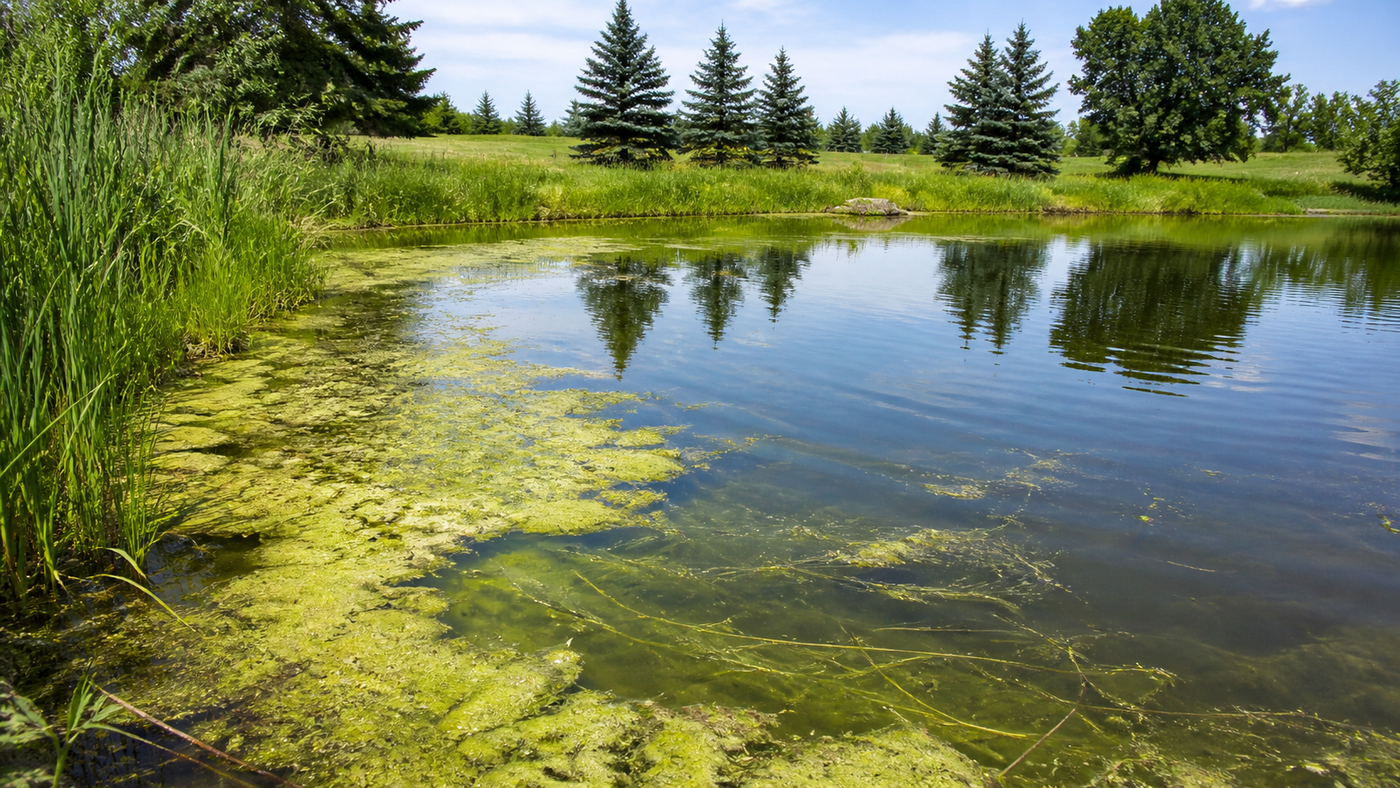
“Pond scum” can be a general term people use for the green, slimy, floating, or stringy material that appears on the surface of ponds, dugouts, lakes, koi ponds, and stormwater ponds. In many cases, pond scum may be caused by algae, cyanobacteria, decomposing organic matter, or a combination of these factors.
A small amount of algae can be normal in a healthy pond. Algae are part of the aquatic food web and can support microscopic life, insects, and other organisms. The problem begins when algae growth becomes excessive and forms thick mats, surface scum, odour, murky water, or lower-oxygen conditions.
In Canadian ponds, pond scum often becomes more noticeable in spring and summer when sunlight increases, temperatures rise, and nutrient-rich runoff enters the water.
Why Pond Scum Forms in Ponds
Pond scum is usually a sign of an imbalance. Common contributing factors include:
1. Excess Nutrients
Algae feed on nutrients like phosphorus and nitrogen. These nutrients can enter ponds through lawn fertilizer, grass clippings, leaves, fish waste, bird droppings, agricultural runoff, and decomposing plants.
Runoff entering a pond may act like fertilizer for algae, creating conditions where blooms can develop, water clarity can decline, oxygen levels may drop, and fish health may be affected.
2. Stagnant Water
Still water can give algae and surface scum an easier place to settle and spread. Without circulation, oxygen levels may drop, organic material may break down more slowly, and nutrients can remain available in the water column.
3. Organic Buildup on the Pond Bottom
Leaves, dead algae, fish waste, and plant debris can settle at the bottom of the pond and turn into muck. As that organic layer breaks down, it may release nutrients back into the water. This can create a recurring cycle: muck feeds algae, algae die and become more muck, and the pond may continue producing scum.
4. Too Much Sunlight
Shallow ponds or ponds without dye, plants, shade, or turbidity control may receive intense sunlight. Sunlight allows algae to photosynthesize and grow quickly, especially in nutrient-rich water.
5. Warm Weather
Warm water can accelerate algae growth. This is especially important in Canadian ponds during late spring, summer, and early fall, when long daylight hours and warmer surface temperatures may support rapid blooms.
Is Pond Scum Dangerous?
Not all pond scum is dangerous, but some blooms can be a health concern. Blue-green algae, also called cyanobacteria, may sometimes produce toxins. Health Canada states that you cannot tell whether a cyanobacteria bloom contains toxins just by looking at it, so suspected blooms should be treated with caution.
If you suspect blue-green algae, avoid swimming, keep pets and livestock away from the water, and report the bloom to your local public health unit or provincial authority. Health Canada also advises rinsing with tap water after accidental contact and keeping pets from swimming in, drinking, or licking material from affected water.
For private ponds, the safest approach is prevention: reduce nutrient loading, improve circulation, manage muck, and monitor changes in water clarity and odour.
How Pond Scum Can Affect Your Pond
When pond scum becomes excessive, it can:
- Reduce water clarity
- Create unpleasant odours
- Contribute to recurring algae blooms
- Block sunlight from beneficial aquatic plants
- Lower dissolved oxygen when algae die and decompose
- Stress fish, especially overnight or during hot weather
- Make the pond less enjoyable for swimming, fishing, and viewing
A pond with heavy scum is usually not just having a surface problem. It often points to a deeper nutrient, oxygen, or organic buildup issue.
How to Treat Pond Scum: A Biology-First Approach
A strong pond scum treatment plan should address both the visible algae and the underlying conditions that allow it to grow.
Step 1: Identify What You Are Seeing
Before treating, it helps to determine whether the pond scum looks like:
Floating green mats: Often filamentous algae.
Pea soup water: Often suspended algae or planktonic algae.
Blue-green paint-like streaks: Could indicate cyanobacteria. Use caution.
Brown, black, or smelly buildup: Often organic muck or decaying algae.
Cloudy water after runoff: May involve clay, suspended particles, phosphates, and organics.
If you are unsure, send photos to the Pond Pro team before applying treatment.
Step 2: Use ProClear Algaecide for Visible Algae Control
For active algae growth, Pond Pro® ProClear Algaecide may be used as a fast-response treatment when applied according to label directions. ProClear is designed to help clear algae and support improved water clarity when used properly.
ProClear is best used when you need visible algae reduction, but it should be part of a broader water management plan. Treating algae without addressing the nutrients and organic buildup behind it can lead to repeat blooms.
Important: Do not treat suspected toxic cyanobacteria blooms without proper guidance. Disturbing or treating certain blooms incorrectly may create additional risk. When in doubt, avoid contact and seek expert or local public health guidance.
Step 3: Add Beneficial Bacteria with NaturalClear
Once algae is controlled, the pond may need help processing the nutrients algae were using. NaturalClear Pond Bacteria and NaturalClear Pond PLUS introduce beneficial microbes that can compete with algae for nutrients.
NaturalClear can be helpful for ponds with recurring murky water, odour, nutrient loading, fish waste, or seasonal organic buildup. NaturalClear Pond PLUS is especially useful in Canadian conditions because it is designed to support performance in cooler spring water temperatures.
Step 4: Break Down Bottom Muck with Muck Pellets
If pond scum keeps returning, part of the issue may be sitting at the bottom of the pond. Organic muck can act like a fertilizer layer, slowly releasing nutrients back into the water.
Pond Pro® Muck Pellets and Muck Pellets PLUS are designed to help digest organic buildup at the pond floor. This is an important long-term step because algae prevention is not just about clearing the surface. It is also about reducing the nutrient source that may keep feeding the problem.
Step 5: Improve Oxygen and Circulation with Aeration
Aeration is one of the most important tools for long-term pond scum prevention. Moving water can make it harder for algae to dominate, while oxygen supports the beneficial bacteria that help break down organic matter.
For Canadian ponds, bottom-diffused aeration systems can be especially valuable because they support vertical water movement, improve oxygen distribution, and help the pond process organic material more efficiently.
Pond Pro’s Can-Air® diffused aeration systems are designed for Canadian pond and lake conditions and can be sized based on pond depth, shape, and management goals.
Step 6: Reduce Sunlight with Pond Dye
Algae need sunlight to photosynthesize. Pond Pro Pond Dye can help limit sunlight penetration, especially in deeper water zones where algae may begin forming.
Pond dye works best as a preventative support tool. It is not a replacement for bacteria, aeration, or algaecide, but it can help reduce the conditions that allow algae to thrive.
Step 7: Clarify Murky Water with QuikClear
If pond scum is paired with cloudy or murky water, suspended particles and phosphates may also be part of the problem. QuikClear can help reduce phosphates and clarify water affected by suspended particles.
This may be especially helpful after rain, runoff, shoreline disturbance, or algae treatment.
Recommended Pond Pro Treatment Strategy
For many Canadian ponds dealing with pond scum, a treatment plan may include:
Visible algae control: ProClear Algaecide
Nutrient competition: NaturalClear or NaturalClear Pond PLUS
Bottom cleanup: Muck Pellets or Muck Pellets PLUS
Long-term prevention support: Bottom-diffused aeration
Sunlight reduction: Pond Pro Pond Dye
Water clarity support: QuikClear
For smaller ponds, Pond Pro also offers Small Pond Maintenance Kits for ponds up to 50,000 gallons. These kits are designed to tackle common pond problems, support clear water, reduce odours, and simplify maintenance using a combination of water treatment products.
How to Help Prevent Pond Scum from Coming Back
Long-term prevention focuses on reducing nutrients and supporting pond balance.
Keep grass clippings, leaves, and fertilizer away from the pond when possible. Maintain a healthy shoreline buffer with native vegetation where practical. Avoid mowing directly to the pond edge, especially on acreage, farm, and lakefront properties.
Use beneficial bacteria consistently through the season. Run aeration during warmer months when oxygen demand is high. Remove excessive decaying plant material before it sinks and becomes muck. Apply pond dye early in the season before sunlight drives heavy algae growth. Treat algae early before it forms thick mats or heavy surface scum.
When to Ask for Expert Help
Contact Pond Pro if your pond has:
- Repeated algae blooms
- Thick surface scum
- Blue-green or paint-like water
- Strong odour
- Fish stress or fish loss
- Heavy bottom muck
- Poor clarity after rainfall
- A large pond, dugout, lake, or commercial waterbody that needs proper sizing
Large ponds often need a custom approach. The right product depends on pond size, depth, water temperature, fish presence, water use, and whether the issue is algae, cyanobacteria, muck, sludge, suspended clay, or nutrient loading.
Final Takeaway
Pond scum is more than a cosmetic issue. It can be a sign that your pond has elevated nutrients, limited circulation, organic buildup, or conditions that allow algae to thrive.
For Canadian pond owners, a strong approach is to treat the visible problem while correcting the biology underneath it. Pond Pro products like ProClear Algaecide, NaturalClear Pond PLUS, Muck Pellets PLUS, QuikClear, Pond Dye, and diffused aeration systems can work together as part of a full pond management strategy.
Need help identifying your pond scum?
Send photos, pond size, depth, and location details to the Pond Pro team so they can recommend a treatment plan for your waterbody.
Recent Posts
-
How to Keep Koi Pond Water Clear | Koi Pond Care Canada
How to Keep Koi Pond Water Clear Clear koi pond water is one of the most common goals for backyard p …20th May 2026 -
Why Pond and Lake Water Often Turns Green During Summer Months
For many people who live near the water, the season can start off beautifully. The ice disappears, …15th May 2026 -
Pond Scum in Canadian Ponds: What It Is, Why It Happens, and How to Treat It
What Is Pond Scum? “Pond scum” can be a general term people use for the green, slimy, floating, or s …5th May 2026