

Summers End: When Should I Stop Treating my Pond?
As summer comes to an end and water temperatures begin to cool, you may still notice algae in your pond. If you're wondering whether you should continue your pond treatment routine into the fall, the answer depends on your pond's conditions and the products you are using.
As temperatures change, the activity of algae and beneficial bacteria can also change. Adjusting your pond-maintenance routine as water temperatures decline can help you make the most of your treatments throughout the fall.
Algae Management in the Fall
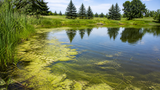
As water temperatures cool, algae growth and activity can change. Depending on the region, weather conditions and pond characteristics, algae may remain visible well into the fall.
If algae is an aesthetic concern, or you intend to use your pond for swimming or other recreational activities, you may consider using ProClear for algae management.
Learn more about ProClear Algaecide
Pond Bacteria in Cooler Water
Pond bacteria are commonly used as part of an overall pond-maintenance program. As temperatures decrease in the fall, bacterial activity naturally slows.
Continuing a bacteria treatment while water temperatures remain within the recommended range can support ongoing biological activity as your pond transitions into winter. As algae declines in autumn, it can contribute additional organic material to the pond. Adding bacteria can help support the breakdown of organic material and nutrients in the pond, which may contribute to improved water clarity.
For our NaturalClear pond bacteria products, we generally recommend continuing treatments while water temperatures remain around 5–7°C or higher. As water temperatures fall, bacterial activity slows, which can reduce the practical benefit of continued treatment.
Our NaturalClear Pond Plus and NaturalClear Lake formulas contain cold-tolerant bacterial species selected for activity in cooler water. However, we generally recommend discontinuing treatment once water temperatures fall below approximately 4°C.
Once water temperatures become consistently cold, pond bacteria become significantly less active. At this point, regular bacteria treatments can be paused until water temperatures rise again in the spring.
During the winter, store any remaining pond bacteria or algaecide according to the product's storage directions. Protect products from freezing and keep them properly sealed when not in use.
Explore NaturalClear Pond Bacteria
Get Your Pond Ready for Winter
Fall is a good time to assess your pond and consider what maintenance may be appropriate before winter. Removing excess organic material, monitoring water conditions and maintaining appropriate circulation can all be part of a seasonal pond-maintenance routine.
If you have questions about your fall pond-maintenance routine or when to pause your treatments, contact our team at sales@pondpro.ca.
Recent Posts
-
How to Keep Koi Pond Water Clear | Koi Pond Care Canada
How to Keep Koi Pond Water Clear Clear koi pond water is one of the most common goals for backyard p …20th May 2026 -
Why Pond and Lake Water Often Turns Green During Summer Months
For many people who live near the water, the season can start off beautifully. The ice disappears, …15th May 2026 -
Pond Scum in Canadian Ponds: What It Is, Why It Happens, and How to Treat It
What Is Pond Scum? “Pond scum” can be a general term people use for the green, slimy, floating, or s …5th May 2026